Performance fabrics
Stain-resistant, high-rub-count weaves for family rooms and hospitality seating.
Sofas, chairs, car seats, marine cushions and awnings rebuilt with the right foam, fabric and stitching for how they are used — at home, on the road or on the water. A piece that needs its frame repaired or its finish renewed first goes through our furniture restoration work.
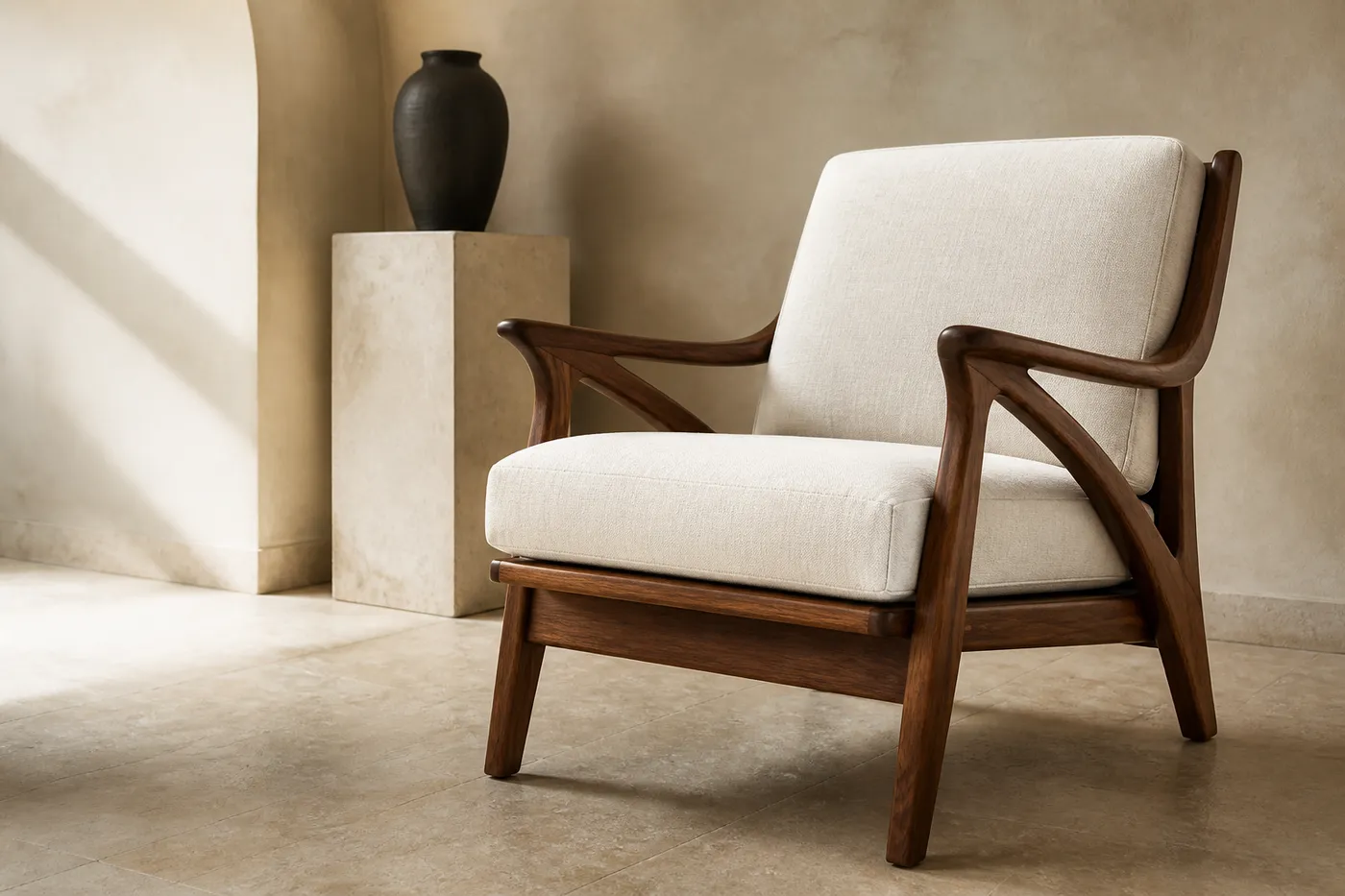
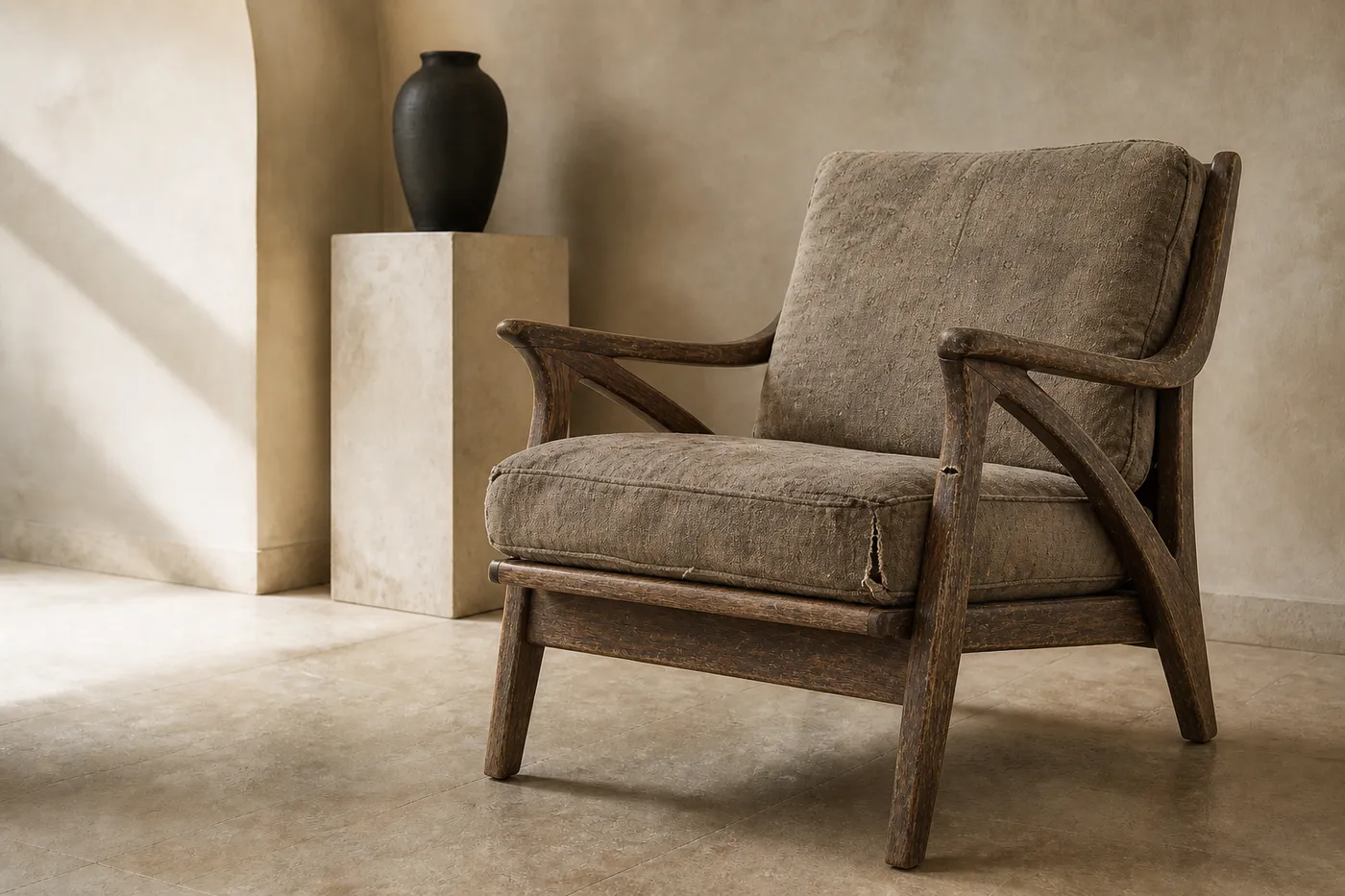
Choose the piece and the estimate form opens with it already selected. No construction crews and no dust — just careful upholstery work, collected and returned across Toronto and the GTA.
Sofas, armchairs, dining chairs, headboards and banquettes rebuilt from the frame out, in fabric or leather chosen for how the piece is used.
Seats, door panels, headliners and trim recovered in automotive vinyl, cloth or leather — daily drivers, work trucks and classics.
Cushions, helm seats and covers in marine-grade vinyl and quick-drain foam, made to survive sun, salt and water.
Residential and commercial awnings, covers and enclosures recovered or made new in weather-rated fabric, with frames and hardware checked.
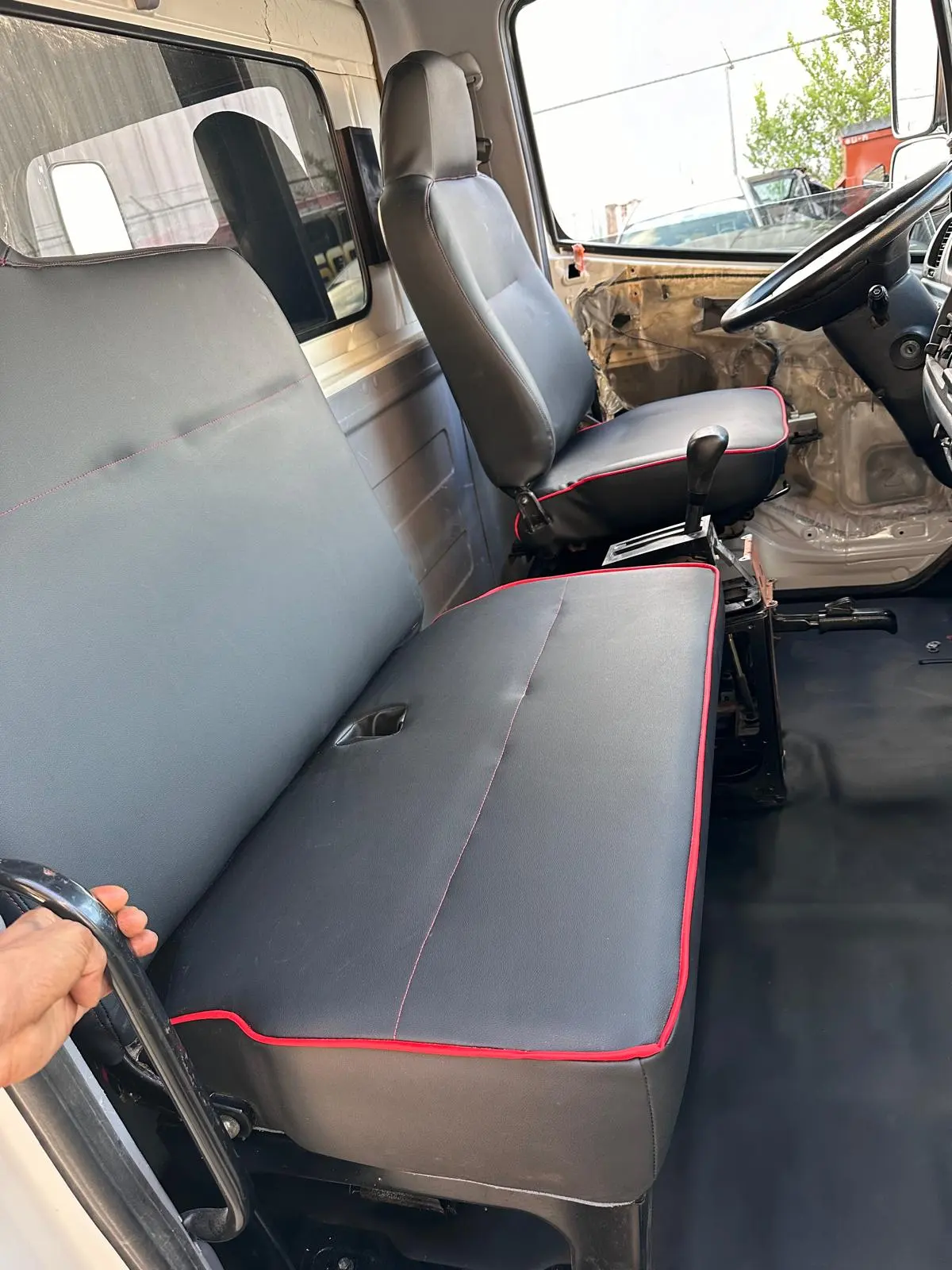
Seats out and the floor stripped bare. A new liner goes down, then the bench and driver’s seat are rebuilt in grey vinyl with red piping. Photographed on site — the full sequence is on the projects page.
See the truck cab project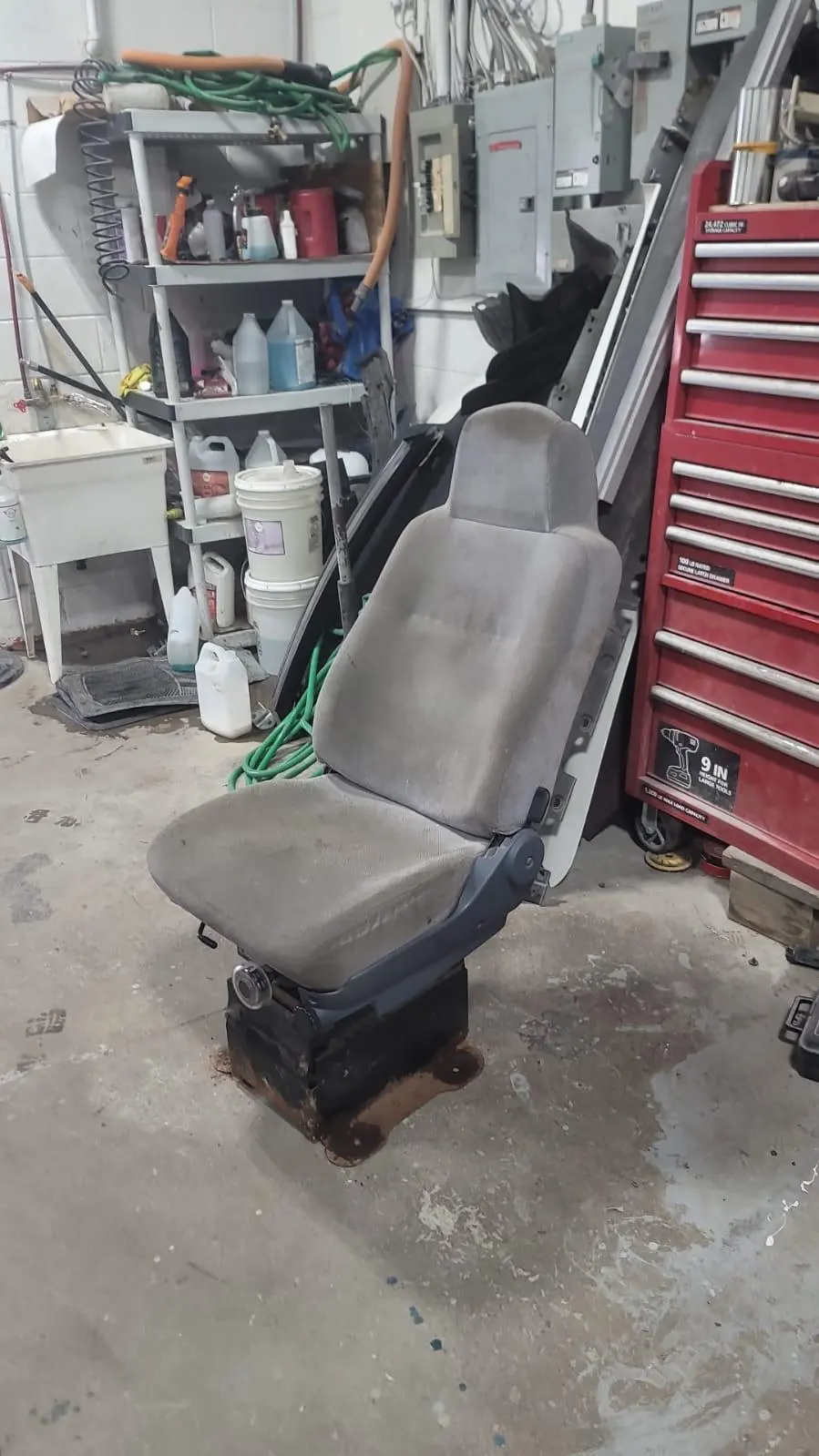
We help specify against real use — rub counts for busy seating, cleanability around food and children, UV and water resistance outdoors — and bring samples so colour and texture are decided where the piece lives.
Stain-resistant, high-rub-count weaves for family rooms and hospitality seating.
Full-grain and top-grain leather for furniture; automotive and marine-grade vinyl where cleaning and weather matter more than softness.
UV-stable, mildew-resistant fabrics and quick-drain foam for boats, patios and awnings.
Natural residential textiles for pieces where comfort and character come first.
Reupholstery makes sense when the frame is good. A sofa built on a hardwood frame, a car seat with a sound base, a boat cushion whose foam has simply given up — each will outlast several coverings, and rebuilding it is often better value than replacing it with something newly made to a lower standard.
Mera upholsters furniture, vehicle interiors, marine seating and awnings for homes, boats and hospitality spaces across Toronto and the GTA — from a single armchair to a restaurant full of banquettes, where the specification has to survive daily commercial use.
Sagging seats are usually a webbing or spring problem rather than a foam problem. Everything is stripped back so the frame can be inspected properly, joints re-glued where they have loosened, and webbing and springs replaced or retied before anything goes back on top. Rebuilding from the frame out is what makes the finished piece sit correctly.
Foam is specified for how the piece will actually be used. A reading chair, a family sofa and a restaurant banquette that seats hundreds of people a week need different densities — using domestic-grade foam in a commercial setting is the most common reason seating fails early.
Seats, door panels, headliners and armrests are stripped to the frame, the foam rebuilt where it has collapsed, and the covers cut and sewn to the original pattern in automotive-grade vinyl, cloth or leather. Stitching, piping and colour are matched to what the vehicle came with — or upgraded deliberately, as on the truck cab on the projects page.
Marine work is specified for sun, salt and water: UV-stable vinyl, foam that drains or resists water, and thread that will not rot. Awnings and canvas covers are recovered or made new in weather-rated fabric, with frames checked and hardware replaced where it has corroded, so the cover fits taut and sheds water properly.
We help specify fabric against how the piece will be used: rub counts for high-traffic seating, cleanability where there is food or children, and durability for commercial work. Patterns are matched across cushions and along seams, and piping is made to match rather than approximated.
Restaurant banquettes, bar stools and dining chairs take punishment that domestic furniture never sees. Commercial work is specified for that, and can be sequenced around service so a dining room is not out of use longer than it needs to be.
Serving Toronto & the GTA. Not sure which applies to your project? Send photos and we will tell you.
Not always — but it is usually better value when the frame is solid hardwood, because you keep a frame that is better than what most new furniture is built on. For a well-made or antique piece it is almost always the right decision. We will say if a piece is not worth the work.
Yes — seats, door panels, headliners and trim, for daily drivers as well as classic and work vehicles. Send photos of the worn areas and tell us the make and model; that is usually enough for an initial assessment.
Yes. Marine and outdoor work uses materials chosen for the conditions rather than for looks alone: UV-stable vinyl or solution-dyed fabric, foam that drains or resists water, and thread that does not break down in sunlight. We will say which combination suits your boat or awning.
It depends on the size of the piece, the pattern repeat and whether the fabric is railroaded. We work this out as part of the estimate rather than asking you to guess, so you are not left over- or under-ordering.
Yes, and the approach is different — original material is kept where it can be, and traditional construction is repaired rather than replaced with modern shortcuts. Tell us what you know about the piece when you get in touch.
Either. Many clients prefer to choose their own; others would rather we source something appropriate for the use. If you supply your own, we will tell you before you buy whether it suits the piece.

Send a few photos and a short description. We reply within one business day with an honest assessment.